Understanding Value in Finance: Assets, Liabilities, Appreciation, and Depreciation
By: Compiled from various sources | Published on Nov 21,2025
Category Beginner
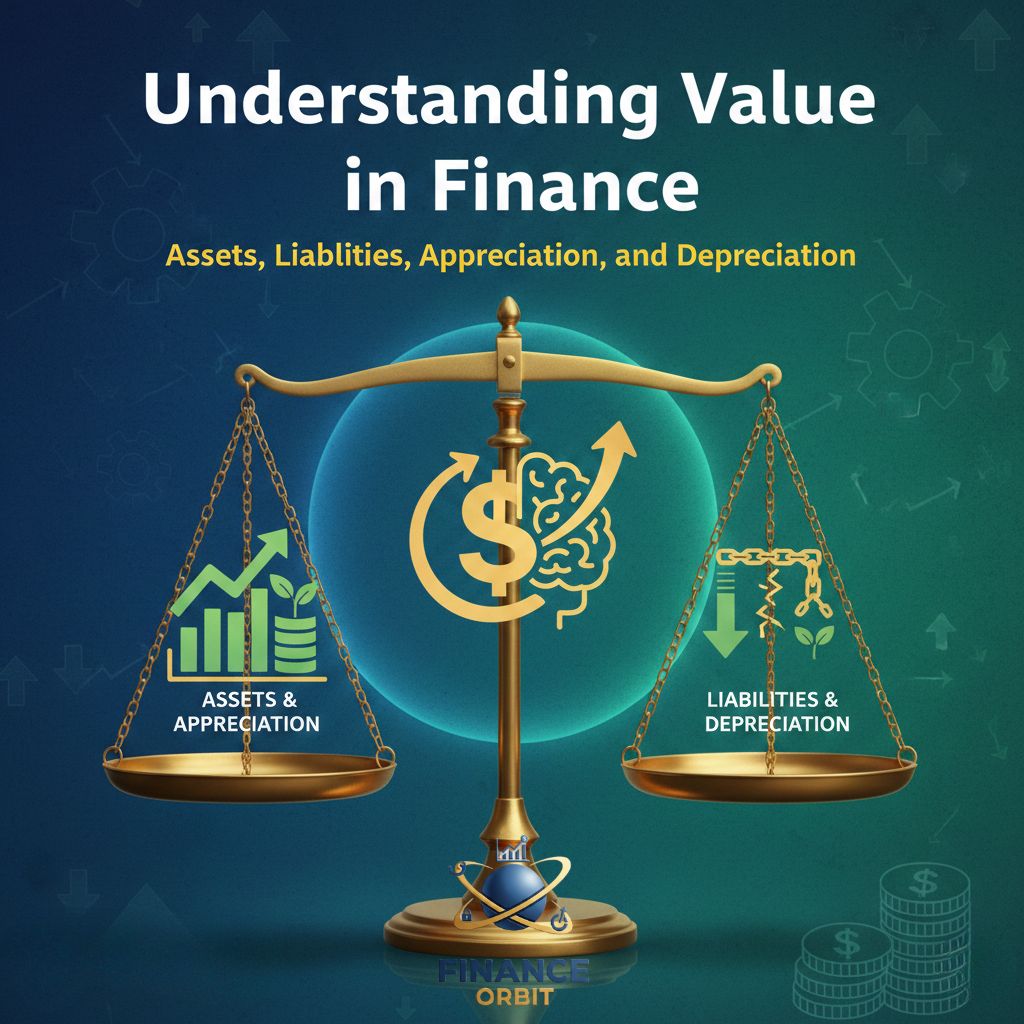
Finance can sometimes feel complicated, but in simple terms, it’s about understanding the value of things how much they’re worth, how they grow, and how they change over time. Whether you are an individual managing personal finances, a business owner tracking your company’s performance, or an investor looking to make informed decisions, understanding value is essential. In this guide, we’ll explore what value means in finance, the different types of assets and liabilities, how appreciation and depreciation work, and why all of this matters for your financial health.
What Is Value in Finance?
In simple terms, value in finance refers to the monetary worth of an asset, liability, or investment. It’s how much something is “worth” at a given time. Value isn’t just a number on a balance sheet—it reflects potential, risk, utility, and sometimes even sentiment.
For example, the value of a car is not only what you paid for it but also how much it can be sold for today, factoring in wear and tear, market demand, and even brand reputation. Similarly, the value of a company includes its physical assets, intellectual property, customer base, and future earning potential.
Understanding value helps you make better decisions. It allows you to compare options, measure growth, assess risk, and plan for the future.
Assets: What You Own
Assets are things you own that have value. They can generate income, be sold for cash, or provide some other benefit. Assets are usually divided into two main categories: current assets and non-current assets.
1. Current Assets
Current assets are items that can be converted into cash within a year. Common examples include:
• Cash and bank balances
• Accounts receivable (money owed to you)
• Inventory or stock
• Short-term investments
Current assets are important because they provide liquidity. They are what you can access quickly to meet short-term financial needs or emergencies.
2. Non-Current Assets
Non-current assets are long-term investments or resources that are not expected to be converted into cash within a year. Examples include:
• Property, plant, and equipment
• Land and buildings
• Vehicles and machinery
• Intellectual property such as patents or copyrights
Non-current assets are essential for long-term growth. They often require significant investment but provide ongoing benefits over time.
3. Intangible Assets
Intangible assets are non-physical but still valuable. These include:
• Brand reputation
• Trademarks
• Goodwill
• Software
While harder to measure, intangible assets can significantly influence the overall value of a business.
Liabilities: What You Owe
Liabilities are the opposite of assets—they represent what you owe to others. Just like assets, liabilities are classified as current and non-current.
1. Current Liabilities
Current liabilities are obligations that need to be settled within a year, such as:
• Accounts payable (money you owe suppliers)
• Short-term loans or overdrafts
• Taxes payable
• Wages payable
2. Non-Current Liabilities
These are debts or obligations due after one year or more. Examples include:
• Long-term loans
• Bonds payable
• Lease obligations
Understanding liabilities is crucial because they affect your net worth and cash flow. Balancing liabilities with assets helps ensure financial stability.
Net Worth: The Value of Ownership
Your net worth is essentially the difference between what you own (assets) and what you owe (liabilities). It’s a key measure of financial health.
Net Worth = Assets – Liabilities
A positive net worth indicates that your assets exceed your liabilities, which is a sign of financial stability. A negative net worth, on the other hand, means you owe more than you own, highlighting a need for careful financial management.
Appreciation: Increasing Value Over Time
Appreciation is the increase in the value of an asset over time. Assets can appreciate due to market demand, scarcity, improvements, or overall economic growth.
Examples of Appreciation:
• Real estate property increasing in value due to neighborhood development
• Stocks growing because the company performs well and profits rise
• Collectibles such as art or antiques gaining value over time
Appreciation is important because it contributes to wealth accumulation. Investors often seek assets with high appreciation potential to grow their net worth.
Depreciation: Decreasing Value Over Time
Depreciation is the opposite of appreciation. It refers to the decrease in the value of an asset over time, usually due to wear and tear, aging, or technological obsolescence.
Examples of Depreciation:
• Vehicles losing value each year due to usage and market demand
• Machinery and equipment wearing out
• Electronics becoming outdated as new models emerge
Depreciation is also a key accounting concept. Businesses record depreciation as an expense, which reduces taxable income while reflecting the true value of assets on the balance sheet.
Factors That Affect Value
Several factors influence the value of assets and liabilities:
1. Market Conditions
Supply and demand dynamics in the market can increase or decrease asset values.
2. Economic Factors
Interest rates, inflation, and economic growth impact the value of both assets and liabilities.
3. Physical Condition
For tangible assets, condition, maintenance, and usability affect value.
4. Legal and Regulatory Environment
Taxes, regulations, and legal restrictions can impact the worth of certain assets or liabilities.
5. Technological Changes
Innovation can make some assets more valuable (like tech stocks) and others obsolete (like old machinery).
Measuring the Value of Assets and Liabilities
Financial professionals use several methods to determine value:
1. Book Value
Book value refers to the value of an asset as recorded on the balance sheet, typically its purchase price minus depreciation.
2. Market Value
Market value is the price an asset could fetch if sold in the open market. This often fluctuates based on supply, demand, and economic conditions.
3. Intrinsic Value
Intrinsic value estimates an asset’s true worth based on fundamentals, such as earnings potential, growth prospects, and risk.
4. Fair Value
Fair value represents a reasonable estimate of an asset’s value at a given time, considering all market factors.
5. Liquidation Value
This is the amount that could be obtained if the asset were sold quickly, often lower than market value.
The Role of Investment in Asset Appreciation
Investing in assets can increase their value. For instance:
• Renovating a property can boost its market price
• Upgrading machinery can improve efficiency and profitability
• Acquiring patents or software can enhance a company’s competitive advantage
Smart investments not only generate immediate returns but also enhance the long-term value of assets.
Liabilities and Their Impact on Financial Value
While assets contribute positively to net worth, liabilities subtract from it. Proper management of liabilities is essential to maintain financial health.
Tips for Managing Liabilities:
• Prioritize paying high-interest debt first
• Avoid taking unnecessary loans
• Track obligations regularly
• Balance short-term and long-term debt
Efficient liability management reduces financial stress and helps preserve the value of assets.
Depreciation Strategies in Business and Finance
Depreciation is not just about losing value—it’s also a strategic tool for businesses.
Common Methods of Depreciation:
• Straight-Line Depreciation: Spreads the asset’s cost evenly over its useful life
• Declining Balance: Accelerates depreciation in early years
• Units of Production: Based on asset usage rather than time
By accounting for depreciation, businesses can plan for asset replacement, reduce taxable income, and maintain accurate financial statements.
Appreciation Strategies for Investors
To maximize asset appreciation:
• Choose assets with strong growth potential
• Maintain assets properly to preserve condition
• Stay informed about market trends
• Diversify investments to spread risk and increase overall value
Understanding which assets are likely to appreciate helps investors make informed decisions and grow wealth over time.
The Importance of Valuation in Finance
Valuation is central to financial planning, investing, and business strategy. Accurate valuation allows you to:
• Make informed investment decisions
• Assess the financial health of a business
• Determine fair prices for buying or selling assets
• Evaluate risk and potential returns
Without understanding value, it’s easy to overpay for assets, underprice products, or make risky financial choices.
Practical Tips for Understanding and Managing Value
• Keep Accurate Records: Track asset purchases, depreciation, and liabilities carefully
• Review Regularly: Market conditions change, so update valuations frequently
• Consider Professional Advice: Accountants and financial advisors can help with accurate valuations
• Balance Risk and Reward: Understand which assets carry more risk and plan accordingly
• Plan for the Long Term: Focus on assets that grow in value over time and manage liabilities responsibly
Conclusion
Value is at the heart of finance. Whether it’s the value of assets, the burden of liabilities, or the potential gains and losses from appreciation and depreciation, understanding value helps individuals and businesses make better financial decisions.
By tracking, managing, and planning for value, you can grow wealth, reduce risk, and secure a strong financial future. Appreciation adds to your net worth, depreciation helps you account for realistic costs, and careful liability management ensures financial stability.
Understanding and leveraging these concepts is essential for anyone looking to take control of their finances and make smart, informed decisions in a constantly changing economic landscape.
Comments
No comment yet. Be the first to comment