When the World Shakes, Your Wallet Feels It: Understanding How Geopolitics Messes With Your Money
By: Compiled from various sources | Published on Jan 01,2026
Category Professional
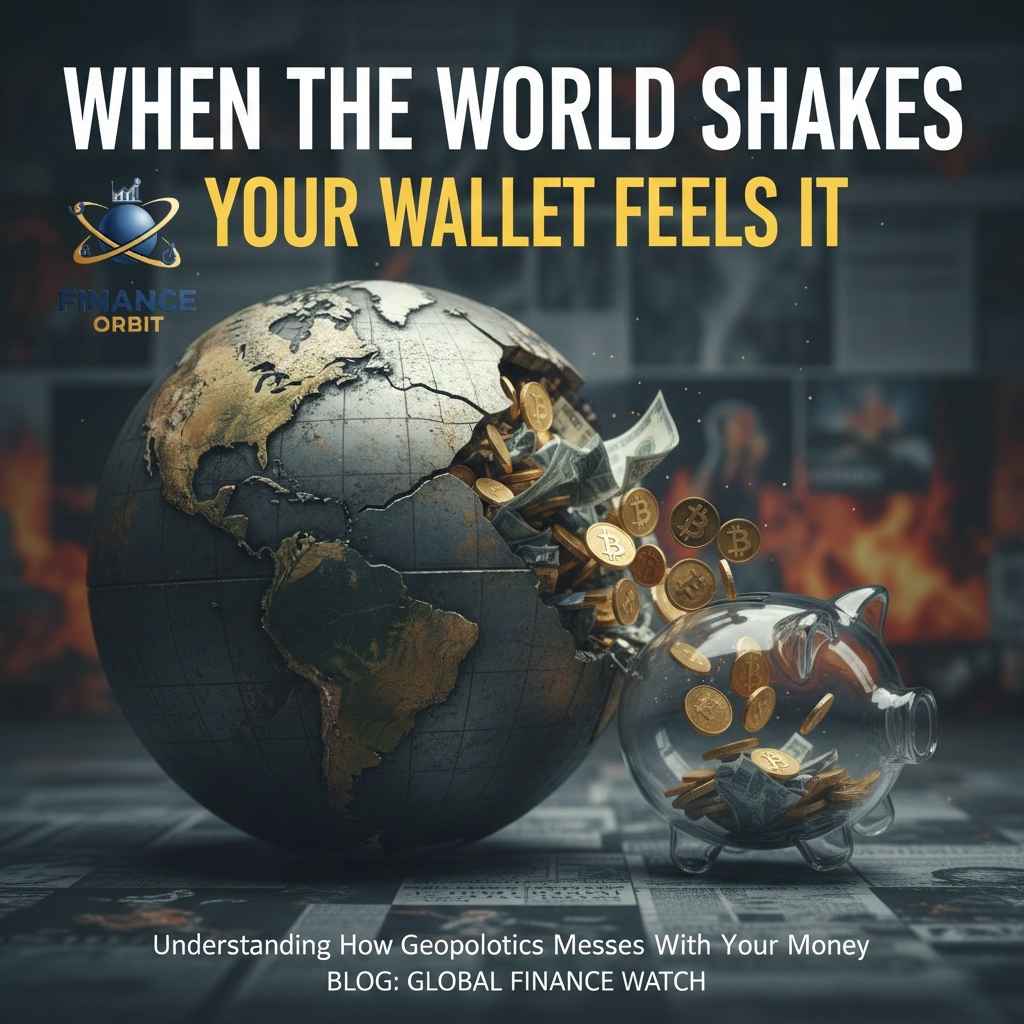
Description: Discover how geopolitical risk affects global markets, from trade wars to currency crashes. Learn strategies to protect your investments during international tensions.
Look, I'll be straight with you: the relationship between global politics and your investment portfolio is messier than a soap opera, and twice as unpredictable.
You know that feeling when you check your stocks and everything's suddenly red? There's a decent chance some politician halfway across the world just said something inflammatory, or two countries decided they're not on speaking terms anymore. Welcome to the wild world of geopolitical market volatility, where international drama translates directly into dollars—your dollars.
Why Your Money Cares About Politics (Even If You Don't)
Here's the thing most people miss: markets hate uncertainty more than they hate bad news. You can plan for bad news. Uncertainty? That's the monster under the bed that keeps portfolio managers up at night.
When geopolitical tensions flare up—whether it's a trade war, sanctions, or actual conflict—markets react like a cat that just saw a cucumber. And honestly? They're not overreacting. The global economy is so interconnected now that when one thread gets pulled, the whole tapestry shifts.
Think about it this way: your smartphone probably has parts from six different countries. Your morning coffee traveled thousands of miles. That shirt you're wearing? The cotton might be American, woven in Bangladesh, dyed in India, and sold by a European company. One political spat in any of those places, and suddenly that supply chain looks shakier than a house of cards in a windstorm.
The Safe-Haven Scramble: Where Money Hides When Things Get Scary
So what happens when geopolitical risk spikes? Investors run for cover faster than you can say "market downturn."
Traditional safe-haven assets become the cool kids everyone wants to sit with:
- Gold: The OG safe haven. Shiny, doesn't corrode, and central banks can't print more of it. When things get dicey, gold prices typically spike because it's been a store of value for literally thousands of years.
- U.S. Treasury Bonds: Boring? Yes. Safe? Also yes. Even when the U.S. is involved in the geopolitical mess, Treasuries often benefit because the dollar remains the world's reserve currency.
- Swiss Franc and Japanese Yen: These currencies strengthen during crises. Switzerland's neutrality and Japan's massive foreign reserves make them attractive when everything else looks risky.
- Cryptocurrencies: The new kid on the block. Bitcoin and others have shown some safe-haven characteristics, though they're still more volatile than your teenager's moods.
Trade Wars: Nobody Wins, But Somebody Always Loses More
Let me tell you about trade wars—they're like regular wars, but with tariffs instead of tanks, and the casualties are measured in GDP points and job losses.
When major economies start slapping tariffs on each other's goods, the trade war impact on markets ripples everywhere. Companies that built entire business models around cheap Chinese manufacturing? They're scrambling. Farmers who export soybeans? Suddenly their buyers are looking elsewhere.
The global supply chain disruption this creates is massive. I've watched companies spend decades optimizing their supply networks, only to see them crumble in months because of political tensions. It's not just about higher costs—though those hurt. It's about the uncertainty. Do you invest in a new factory when the rules might change tomorrow?
Oil, Middle East, and Your Gas Price: A Love Triangle Nobody Asked For
You want to see oil price geopolitics in action? Watch what happens to crude prices when tensions spike in the Middle East.
The region controls a ridiculous percentage of global oil production, and the Strait of Hormuz—this narrow waterway—handles about 21% of the world's petroleum. That's not a typo. One-fifth of all oil passes through a space that's only 21 miles wide at its narrowest point.
Any conflict, threat, or even strong rhetoric in the region? Oil prices jump. And when oil prices jump, everything gets more expensive. Shipping costs rise. Airlines pay more. That translates to higher ticket prices, more expensive goods, and inflation that hits your wallet whether you drive or not.
Sanctions: Economic Warfare With Global Consequences
Economic sanctions are fascinating because they're designed to hurt one country but end up affecting dozens. Russia faces sanctions? European energy prices spike. Iran gets sanctioned? Oil markets wobble. Venezuela's economy collapses under sanctions? Refugee crises and regional instability follow.
The sanctions effect on commodity prices can be brutal and unexpected. When major producers get cut off from global markets, buyers scramble to find alternatives. Prices for everything from wheat to aluminum can swing wildly.
And here's what's wild: secondary sanctions can hit companies that aren't even in the sanctioned country. Do business with the wrong entity, and suddenly your company's locked out of the U.S. financial system. That's powerful stuff.
Currency Markets: The Ultimate Geopolitical Mood Ring
Want to know how currency markets geopolitics really works? Watch what happens to emerging market currencies when U.S.-China tensions escalate.
The dollar strengthens because everyone wants the "safety" of the world's reserve currency. Meanwhile, currencies in places like Turkey, South Africa, or Brazil? They get hammered. Not because anything changed in those countries—just because money is flowing out, seeking stability elsewhere.
This creates a vicious cycle. Weaker currencies mean imported goods cost more. That fuels inflation. Central banks raise interest rates to defend the currency. Higher rates slow economic growth. It's like watching dominoes fall in slow motion.
Emerging Markets: First to Fall, Last to Recover
Here's an uncomfortable truth: emerging markets geopolitical risk hits different.
When developed markets catch a cold, emerging markets get pneumonia. These economies face more severe volatility, massive capital outflows, currency depreciation, and skyrocketing borrowing costs during geopolitical stress.
Why? Because they're seen as riskier. When global uncertainty rises, investors pull money from these markets first. It doesn't matter if Argentina or Indonesia had anything to do with the crisis—they're getting hit anyway.
| Market Type | Crisis Response | Recovery Time |
|---|---|---|
| Developed Markets | Moderate volatility, some safe-haven inflows | 6-12 months typically |
| Emerging Markets | Severe volatility, capital flight, currency crisis | 12-24+ months often |
Industries That Live and Die By Geopolitics
Not all sectors respond equally to political risk analysis. Some industries are basically geopolitical weathervanes:
Energy companies watch Middle East developments like hawks watch mice. One conflict in the region, and their stock prices can swing 10% in a day.
Defense contractors often benefit from increased tensions. Sad but true—when countries feel threatened, defense budgets expand.
Technology firms get caught in the crossfire of tech wars. The U.S.-China tech competition has reshaped the entire semiconductor industry.
Agriculture faces both direct hits from tariffs and indirect impacts from currency fluctuations.
Shipping and logistics companies navigate literal war zones sometimes, with insurance costs that reflect every geopolitical hotspot.
Protecting Your Portfolio: Practical Strategies That Actually Work
Alright, enough doom and gloom. Let's talk about investing during geopolitical uncertainty without losing your mind.
Diversification isn't just a buzzword—it's your first line of defense. Don't put all your eggs in one geographical basket. Spread investments across regions, sectors, and asset classes. When one area gets hit, others might hold steady or even benefit.
Maintain some liquidity. Cash feels boring when markets are roaring, but it's golden when you need to weather a storm or grab bargains during a panic sell-off.
Consider defensive sectors like utilities and consumer staples. People still need electricity and groceries regardless of what's happening in geopolitics.
Use hedging strategies if you've got significant exposure. Options can protect against downside risk, though they cost money (think of it as insurance).
Stay informed but don't panic. Follow geopolitical tension indicators for investors, but remember that markets often overreact initially. Sometimes the best move is no move.
Elections: Democracy in Action, Volatility in Markets
Major elections create massive market uncertainty because they represent potential policy shifts. A new U.S. president might change tax policy, trade agreements, and regulatory approaches. India's elections affect nearly 1.4 billion people and one of the world's fastest-growing economies.
Markets typically get nervous before elections and settle down after, regardless of who wins. The uncertainty is worse than the outcome, usually.
Central Banks: The Adults in the Room (Sometimes)
When geopolitical crises hit, central banks become crucial stabilizers. They provide liquidity, adjust interest rates, intervene in currency markets, and coordinate internationally to prevent financial contagion.
The Federal Reserve, European Central Bank, and other major institutions have tools to calm markets—though those tools aren't unlimited. Watch central bank communications closely during geopolitical stress. They're often signaling their next moves.
The China-U.S. Dynamic: The Relationship That Moves Markets
You can't talk about international trade conflicts without addressing the elephant in the room: U.S.-China relations.
These two economies are so large and interconnected that their relationship affects everyone. Trade flows, technology transfer, supply chains, currency markets—all of it hinges partly on whether Washington and Beijing are cooperating or competing.
The tech war alone has reshaped global semiconductor supply chains. Companies now talk about "de-risking" from China, which is corporate speak for "we're terrified of getting caught in the middle."
Looking Forward: Navigating an Uncertain World
Here's what I've learned watching markets react to geopolitical events for years: you can't predict everything, but you can prepare for anything.
Geopolitical risk isn't going away. If anything, it's intensifying as we navigate climate change, technological disruption, and shifting global power dynamics. The world's becoming multipolar, with multiple centers of power competing for influence.
Your job as an investor—or just someone trying to protect their savings—isn't to predict which crisis comes next. It's to build a resilient portfolio that can weather different scenarios.
Stay diversified. Keep some powder dry. Don't panic-sell when headlines scream. And remember: every crisis eventually passes. Markets have survived world wars, nuclear standoffs, and countless regional conflicts. They're resilient because the human desire to create, trade, and prosper is stronger than any temporary disruption.
The Bottom Line
How geopolitical events affect stock prices is complicated, interconnected, and often counterintuitive. But understanding the basics—safe-haven flows, supply chain vulnerabilities, currency dynamics, and sector-specific impacts—gives you an edge.
The key is accepting that geopolitical risk is now a permanent feature of investing, not a bug. Build that into your strategy from the start. Think long-term, stay informed, and don't let fear drive your decisions.
Because at the end of the day, the markets reward patience and punish panic. Always have.
Ready to take control of your investment strategy? Start by assessing your portfolio's exposure to geopolitical risks. Identify concentration risks, consider adding international diversification, and maybe—just maybe—buy a little gold. Not because the sky is falling, but because sometimes it pays to be prepared.
The world's messy. Your portfolio doesn't have to be.
Comments
No comment yet. Be the first to comment