EMI Explained: The Monthly Payment That Makes Everything "Affordable" (Until You Do the Math)
By: Compiled from various sources | Published on Jan 06,2026
Category Beginner
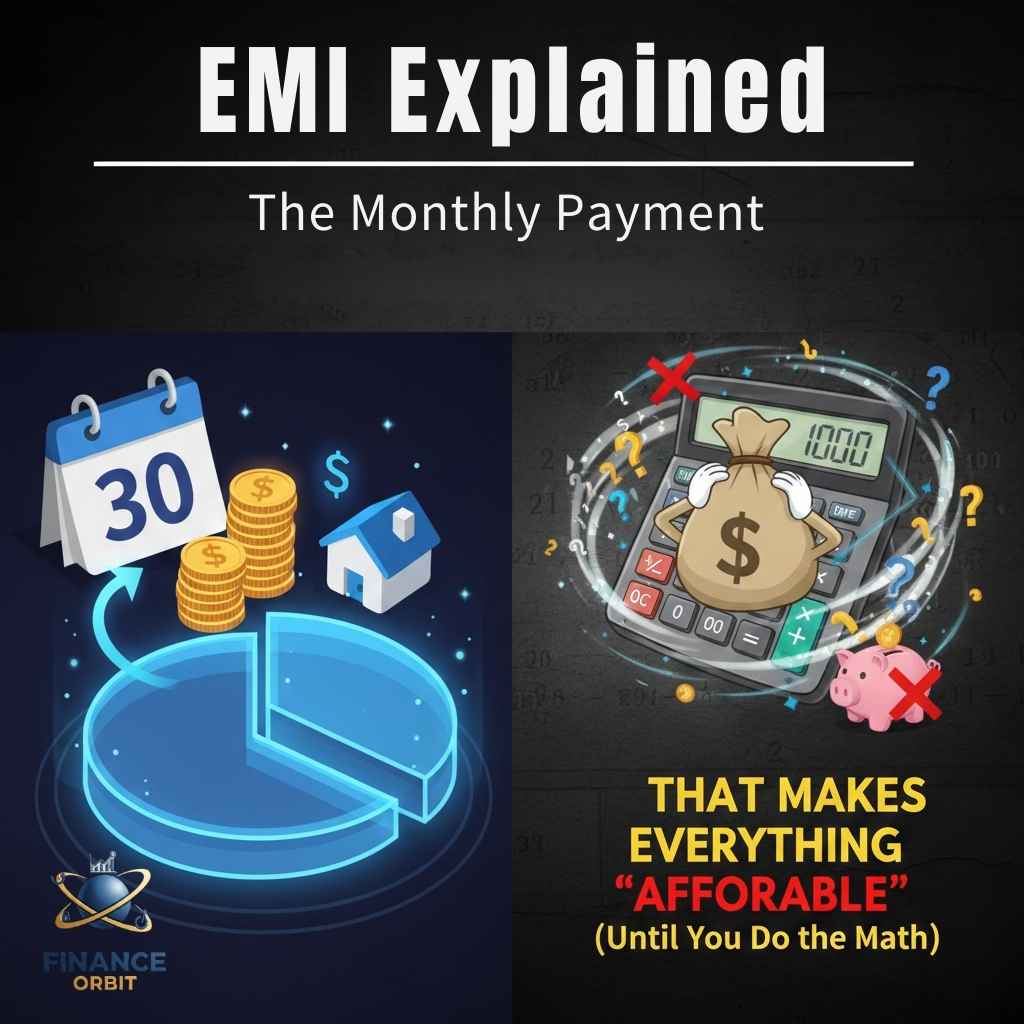
Description: Understand what EMI is, how it works, and whether it's actually saving you money. Learn to calculate EMI, compare options, and avoid common borrowing mistakes.
Here's a scenario you've definitely experienced: You're shopping for something expensive—a phone, laptop, maybe furniture. The price tag makes you wince. Then the salesperson drops the magic phrase:
"It's only ₹2,500 per month for 12 months!"
Suddenly, it feels affordable. You can swing ₹2,500 monthly, right? So you agree, sign some papers, and walk out feeling smart about your purchase.
Fast-forward six months, and you're wondering why you're still paying for something that's already feeling outdated, and why that "affordable" monthly payment somehow added up to way more than the original price.
Welcome to the world of EMI, where big purchases get broken into bite-sized payments that feel manageable but often cost you significantly more than paying upfront.
Equated Monthly Installments aren't inherently evil. They're a financial tool that, when used wisely, makes necessary purchases possible without draining your savings. But they're also expertly designed to make you spend more than you planned, on things you might not actually need, at interest rates you probably didn't fully understand.
So let me break down how EMI works, when it makes sense, when it's a terrible idea, and how to avoid the traps that keep people paying for purchases long after the excitement has worn off.
Because understanding this stuff is the difference between using debt strategically and becoming its victim.
What EMI Actually Means (The Basic Breakdown)
EMI definition is straightforward: Equated Monthly Installment—a fixed payment you make each month to repay a loan over a predetermined period.
When you borrow money (whether for a house, car, phone, or anything else), instead of paying the entire amount back at once, you pay it back in equal monthly chunks. Each payment includes:
Principal: A portion of the original amount you borrowed
Interest: The cost of borrowing that money
The "equated" part means each monthly payment is the same amount, making budgeting easier. You know exactly what you're paying every month until the loan is fully repaid.
The Simple Example
You buy a ₹30,000 phone on 12-month EMI at 15% annual interest.
Your EMI might be approximately ₹2,750 per month.
After 12 months, you've paid roughly ₹33,000 total. That extra ₹3,000? That's the interest—the price you paid for not having ₹30,000 upfront.
The Three Components: Principal, Interest, and Tenure
Understanding EMI calculation requires knowing these three factors:
Principal Amount
The actual amount you're borrowing. In the phone example, that's ₹30,000.
This is what you'd pay if you bought it outright with cash. Everything beyond this is cost of borrowing.
Interest Rate
The percentage charged for lending you money. This is usually annual but gets divided across monthly payments.
Interest rates vary wildly—home loans might be 8-9%, personal loans 12-18%, credit card EMIs 15-24%, "zero-interest" schemes (which aren't really zero interest, but we'll get there).
Tenure (Loan Period)
How long you're taking to repay. Longer tenure means lower monthly payments but higher total interest paid. Shorter tenure means higher monthly payments but less total interest.
This is where people often make expensive mistakes.
How EMI Is Actually Calculated
EMI calculation formula looks scary but the concept is simple:
EMI = [P x R x (1+R)^N] / [(1+R)^N-1]
Where:
- P = Principal loan amount
- R = Monthly interest rate (annual rate ÷ 12 ÷ 100)
- N = Number of monthly installments
The Practical Reality
Nobody calculates this by hand. Use online EMI calculators. Every bank and financial website has them. Plug in the three numbers—principal, interest rate, tenure—and it spits out your monthly EMI.
But understanding what affects that number helps you negotiate better terms.
Higher principal = higher EMI (obviously)
Higher interest rate = higher EMI
Longer tenure = lower EMI but higher total interest
You're always balancing these factors.
The Interest Rate Trap: What They're Not Telling You
Here's where EMI interest rates get sneaky.
Flat Rate vs. Reducing Balance
Flat rate: Interest calculated on the original principal for the entire tenure. Sounds simple but costs more.
Reducing balance: Interest calculated only on the remaining principal. As you pay down the loan, interest decreases. This is better for you.
Example with ₹1,00,000 loan at 12% for 2 years:
Flat rate: Interest on ₹1,00,000 for full 24 months. Total interest ≈ ₹24,000
Reducing balance: Interest decreases as principal reduces. Total interest ≈ ₹13,000
Same stated rate, wildly different actual cost. Always ask which method they're using.
The Annual Percentage Rate (APR) Reality
The interest rate advertised isn't always the full story. Processing fees, insurance charges, and other costs increase the effective interest rate.
A loan advertised at 12% might actually cost you 14-15% when all fees are included. This is the APR—the true cost of borrowing.
Always ask for the APR, not just the nominal interest rate.
Types of EMI: Know What You're Signing Up For
Different types of EMI come with different implications:
Standard EMI
Fixed monthly payments from day one. Most common for car loans, home loans, personal loans.
Predictable, straightforward, easy to budget for.
Step-Up EMI
Lower payments initially, increasing over time. Marketed to young professionals expecting salary increases.
The risk: If your income doesn't increase as expected, you're stuck with payments you can't afford.
Step-Down EMI
Higher payments initially, decreasing over time. Rare, but useful if you have temporary higher income that will decrease.
Balloon EMI
Small monthly payments with a large final payment. Seems attractive monthly but that final balloon payment can be financially devastating if you're not prepared.
The danger: People focus on affordable monthly payments and ignore the massive final bill.
Zero-Interest EMI
Marketed as "no interest," but the interest is usually built into the product price or covered by the merchant offering a discount.
How it works: The merchant gives the bank a discount that covers the interest. You're not actually paying interest separately, but you're probably paying more than if you'd negotiated a cash discount.
When EMI Makes Sense (Strategic Borrowing)
Benefits of EMI in specific situations:
Essential, Appreciating, or Income-Generating Assets
Home loans: Property often appreciates. Rent you'd pay otherwise makes the EMI effectively cheaper. Tax benefits reduce actual cost.
Education loans: Increases earning potential. Future income justifies current borrowing.
Business equipment: Generates revenue that covers the EMI and more.
When You Have the Money But Better Use for It
If you can invest money at returns higher than the EMI interest rate, borrowing makes mathematical sense.
Example: Car loan at 8% while your investments earn 12%. Borrowing is actually profitable if you invest the lump sum instead.
This requires discipline and actual investment returns, not just wishful thinking.
Genuine Emergencies
Medical emergencies, urgent home repairs, situations where you need money immediately and don't have it.
EMI spreads the cost, making it manageable. Just get the lowest interest rate possible.
When Interest Is Truly Zero or Negligible
Rare genuinely zero-interest offers where you're not paying extra compared to cash price. Verify this is real, not marketing.
When EMI Is a Terrible Idea (The Debt Trap)
EMI disadvantages that keep people financially stuck:
Depreciating Assets You Can't Afford
Buying phones, gadgets, furniture on EMI when you don't have savings is a red flag. These items lose value immediately. You're paying interest on something worth less than you owe.
"Affordable Monthly Payment" Syndrome
Focusing on monthly payment rather than total cost leads to overspending. That ₹2,000 monthly EMI for five years? You just paid ₹1,20,000 for something that cost ₹90,000.
Multiple Simultaneous EMIs
One EMI is manageable. Three or four simultaneously? You're drowning in debt before you realize it.
Each individual payment seems small, but combined they consume huge portions of your income, leaving nothing for savings or emergencies.
High-Interest Consumer Loans
Personal loans and credit card EMIs often carry 15-24% interest. At these rates, you're paying massive premiums for instant gratification.
A ₹50,000 purchase at 18% over 3 years costs you an extra ₹15,000+. That's not convenience; that's expensive impulsivity.
When You Could Save and Buy Later
If you can reasonably save up and buy in a few months, that's almost always better than paying interest to have it now.
Delayed gratification saves you the interest cost entirely.
The EMI Math You Need to Understand
Calculating total EMI cost reveals the real price:
Example: ₹5,00,000 Car Loan
Scenario A: 3 years at 9% interest
Monthly EMI: ₹15,900
Total paid: ₹5,72,400
Interest cost: ₹72,400
Scenario B: 5 years at 9% interest
Monthly EMI: ₹10,400
Total paid: ₹6,24,000
Interest cost: ₹1,24,000
The difference: Lower monthly payment in Scenario B costs you ₹51,600 more overall.
This is why "affordable monthly payments" can be financially devastating. The math doesn't lie.
Smart EMI Strategies
How to use EMI wisely without getting trapped:
Calculate Total Cost, Not Just Monthly Payment
Multiply monthly EMI by number of months. See what you're actually paying. Compare to cash price. Is the convenience worth that premium?
Shortest Tenure You Can Afford
Higher monthly payments, but dramatically less total interest. If you can swing it, always choose shorter tenure.
Prepayment When Possible
Many loans allow prepayment without penalty. Pay extra when you can—reduces principal faster, saves interest.
Even an extra ₹1,000-2,000 monthly can cut years off a home loan and save lakhs in interest.
Compare Offers Ruthlessly
Don't accept the first EMI offer. Shop around. Banks compete. A 1-2% interest difference seems small but compounds into huge savings over time.
Read the Fine Print
Processing fees, prepayment penalties, insurance charges—these add cost. Understand total expense, not just the advertised rate.
Avoid EMI for Depreciating Assets
Phones, electronics, furniture—save up and buy with cash. If you must use EMI, shortest possible tenure.
The 50/30/20 Rule with EMIs
Don't let EMIs exceed 30% of your take-home income. You need money for savings, emergencies, and living expenses.
EMI vs. Credit Cards: Understanding the Difference
EMI on credit cards works differently:
Standard Credit Card Purchases
If you carry a balance, you're charged interest (typically 36-48% annually). This isn't EMI—it's revolving credit with compound interest.
Terrifyingly expensive. Never carry credit card balances if avoidable.
Credit Card EMI Conversion
Some cards let you convert purchases to EMI. Interest rates are lower than standard credit card rates (15-18%) but higher than dedicated loans.
Useful for genuine emergencies, terrible for routine purchases.
The Zero-Interest EMI Reality
No-cost EMI explained honestly:
"Zero-interest" usually means:
- The bank charges interest to the merchant
- The merchant prices this into the product cost
- You're effectively paying interest through higher base price
To verify it's truly zero-cost: Compare the EMI total (monthly payment × months) to the cash price. If it's exactly the same, it's genuinely zero-cost. If EMI total is higher, you're paying interest indirectly.
Sometimes merchants offer genuine zero-interest as a promotion. Verify by doing the math.
When to Walk Away
Red flags in EMI offers:
- Interest rate not clearly disclosed
- Pressure to decide immediately
- Processing fees exceeding 2-3% of loan amount
- Balloon payments you didn't expect
- Prepayment penalties that lock you in
- "Affordable monthly payment" emphasis without discussing total cost
If anything feels sketchy, walk away. Better deals exist.
The Bottom Line
EMI benefits and drawbacks balance like this:
Use EMI for: Essential purchases, appreciating assets, genuine emergencies, when you can invest cash at higher returns, truly zero-interest offers.
Avoid EMI for: Wants vs. needs, depreciating gadgets you can save for, multiple simultaneous loans, high-interest consumer debt, lifestyle inflation.
EMI is a tool. Tools aren't good or bad—usage determines outcomes.
Ready to use EMI wisely? Calculate total cost before committing. Choose shortest affordable tenure. Understand true interest rate. Prepay when possible. Keep EMI obligations under 30% of income.
EMI can make necessary purchases manageable or trap you in endless debt cycles. The difference is understanding the math, reading the terms, and being honest about needs versus wants.
Your financial future depends on making this distinction.
Now go calculate what those "affordable monthly payments" are actually costing you.
The answer might change your spending habits forever.
And that's exactly the point.
Comments
No comment yet. Be the first to comment