Budgeting 101: The Guide for People Who've Been Winging It (And It's Not Going Great)
By: Compiled from various sources | Published on Jan 09,2026
Category Beginner
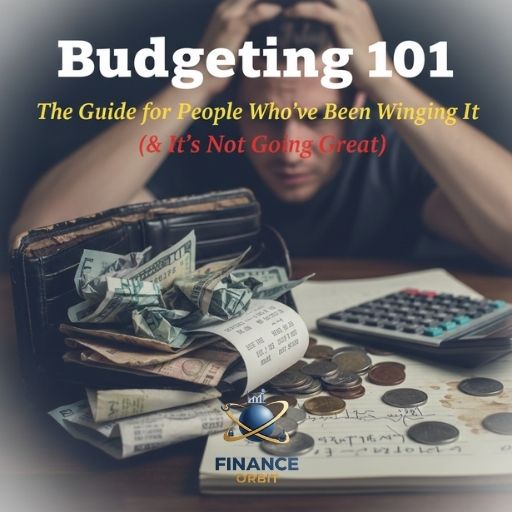
Description: Learn simple budgeting for beginners with practical strategies that actually work. Master personal finance basics, track expenses, and take control of your money without complicated spreadsheets.
Let me tell you about my pre-budget life.
I made decent money. I wasn't buying yachts or designer handbags. I just... spent normally. Coffee here, takeout there, a few subscriptions, occasional shopping. Nothing crazy.
And yet, somehow, I was always broke two days before payday. My savings account laughed at me with its pathetic three-digit balance. I had zero idea where my money went—it just... disappeared. Like some financial black hole existed between my paycheck and my bank account.
Then one month I actually tracked every single expense. Every. Single. One.
Turns out I was spending $340 monthly on food delivery. Three hundred and forty dollars. On food I could've made at home for probably $80. I was hemorrhaging money on convenience I didn't even enjoy that much, and I had no idea because I'd never actually looked.
Budgeting for beginners isn't about deprivation, complex spreadsheets, or turning into someone who reuses tea bags and calculates the cost-per-use of every purchase. It's about knowing where your money goes and making intentional choices instead of wondering why you're always broke despite having a job.
Personal finance basics should've been taught in school. They weren't. So most of us stumble into adulthood with approximately zero idea how to manage money, relying on vibes and hoping everything works out.
Spoiler: it doesn't work out.
But here's the good news: how to budget money is actually simple. Not always easy, but simple. You don't need a finance degree or complicated software or to give up everything you enjoy.
You just need to know what's coming in, what's going out, and make those two numbers work together instead of fighting each other.
Let me show you how.
Why You Actually Need a Budget (Beyond "You Should")
Importance of budgeting becomes obvious once you understand what it actually does:
It Prevents the "Where Did My Money Go?" Syndrome
Without a budget, money is abstract. You know you spent something, but on what? No clue. A budget makes money concrete and trackable.
The realization: Most people are shocked when they actually track spending. That $5 coffee daily? $150/month. Those "small" subscriptions? $80/month combined. It adds up invisibly.
It Reduces Financial Stress
Money anxiety often comes from uncertainty. You don't know if you can afford something. You don't know if you're saving enough. You just... worry constantly.
A budget provides clarity: Yes, you can afford this. No, you can't afford that. The answer is right there. Decisions become easier.
It Helps You Reach Goals
Want to save for a vacation? Down payment? Emergency fund? Without a budget, these goals are vague wishes competing with daily spending.
With a budget: You allocate money toward goals deliberately. They stop being "someday" and become "in 8 months."
It Reveals Your Actual Priorities
You think you value health and fitness. But you spend $200/month on restaurant meals and $0 on a gym membership or healthy groceries.
Budgets don't lie: Your spending reveals your real priorities, not your aspirational ones.
It Prevents Lifestyle Inflation
Lifestyle inflation: As income increases, spending increases proportionally, leaving you no better off financially despite earning more.
A budget catches this: You deliberately decide what to do with raises instead of automatically upgrading everything.
Step 1: Figure Out What You Actually Earn
Calculate monthly income sounds simple but gets complicated fast.
For Salaried Employees
Take-home pay, not gross salary. That's what actually hits your bank account after taxes, insurance, retirement contributions, etc.
If paid bi-weekly: Multiply one paycheck by 26, divide by 12. This accounts for the two months annually with three paychecks.
If paid twice monthly: Multiply one paycheck by 2.
For Variable Income (Freelancers, Commission-Based, Gig Workers)
Average your last 6-12 months of income. Use the lower end for budgeting—better to underestimate and have surplus than overestimate and come up short.
Build in buffer: Variable income requires extra emergency fund and conservative spending since you can't predict exact earnings.
Don't Forget Irregular Income
Tax refunds, bonuses, freelance side gigs—these are income but shouldn't be in your regular monthly budget since they're not guaranteed.
Better approach: Treat irregular income as bonus money for goals (debt payoff, savings boost) or one-time expenses, not regular spending.
Step 2: Track Where Your Money Actually Goes
Expense tracking methods that don't require a finance degree:
The One-Month Deep Dive
Commit to tracking every expense for one month. Not estimating—actual tracking.
Methods:
Notebook method: Write down every purchase immediately. Tedious but effective.
App method: Mint, YNAB (You Need A Budget), EveryDollar, or PocketGuard link to bank accounts and categorize automatically.
Spreadsheet method: Download bank/credit card statements, categorize in Excel or Google Sheets.
Receipt method: Keep every receipt, tally at end of month.
Why this matters: Estimates are always wrong. Actual data reveals reality.
Categories to Track
Fixed expenses (same each month):
- Rent/mortgage
- Insurance
- Car payment
- Subscriptions
- Loan payments
Variable expenses (change monthly):
- Groceries
- Utilities
- Gas
- Personal care
- Entertainment
- Dining out
- Shopping
Periodic expenses (not monthly):
- Car maintenance
- Medical expenses
- Gifts
- Annual subscriptions
The Revelation
Most people discover they spend way more than they thought on certain categories. Food, shopping, and "miscellaneous" are common money pits.
This isn't about judgment: It's about awareness. You can't change what you don't measure.
Step 3: Choose a Budgeting Method That Doesn't Make You Want to Die
Simple budgeting methods that actually work for real humans:
The 50/30/20 Rule (Good for Beginners)
50% Needs: Rent, utilities, groceries, insurance, minimum debt payments—essentials.
30% Wants: Dining out, entertainment, hobbies, shopping, subscriptions—lifestyle.
20% Savings/Debt: Emergency fund, retirement, extra debt payments, savings goals.
Why it works: Simple, flexible, doesn't require tracking every penny.
When it doesn't work: If your needs exceed 50% of income (expensive city, high debt), you'll need different approach.
Zero-Based Budget (For Control Freaks)
Every dollar gets assigned a job. Income minus expenses and savings equals zero.
Example: $3,000 income. Assign every dollar—$1,200 rent, $400 groceries, $200 savings, etc., until you've allocated all $3,000.
Why it works: Forces intentionality. Every dollar has purpose.
The catch: Requires more effort and tracking. But YNAB (app) makes this easier.
Envelope System (Cash-Based)
Withdraw cash for variable categories (groceries, entertainment, dining out) and put in physical envelopes. When the envelope is empty, you're done spending in that category.
Why it works: Physical cash makes spending real. It's psychologically harder to spend than swiping cards.
Modern version: Use separate checking accounts or digital "envelopes" if you don't want to deal with cash.
Pay Yourself First
Automate savings immediately when you get paid. What's left is spending money.
The psychology: If savings happens automatically, you adapt spending to what remains. If you save "whatever's left over," there's never anything left.
Combine with: Any other budgeting method for complete financial plan.
Anti-Budget (For Budget-Haters)
Track one number: Savings rate. As long as you're hitting your target (say, 20% of income), spend the rest however you want without tracking.
Why it works: Focuses on the outcome (saving enough) rather than restricting spending categories.
The risk: Doesn't reveal wasteful spending or help with specific goals. But better than no budget at all.
Step 4: Cut Expenses (Without Giving Up Your Soul)
How to reduce expenses while maintaining sanity:
The Low-Hanging Fruit
Subscriptions you don't use: Netflix, Spotify, gym membership, app subscriptions. Cancel what you haven't used in a month.
Audit monthly: Services you forgot about are literally burning money.
Food (The Money Pit)
Meal planning: Plan a week at a time, grocery shop with list, prep ingredients.
Reduce delivery/takeout: From daily to 2-3 times weekly saves hundreds monthly.
Brown bag lunch: $12 daily lunch out = $240/month. Packed lunch = maybe $60.
Reality check: You don't have to quit restaurants entirely. Just reduce frequency. Every meal cooked at home saves money.
Transportation
Refinance car loan if interest rate is high and credit has improved.
Carpool, public transit, or bike when possible.
Maintain your car: Prevents expensive repairs from neglect.
Shopping and Entertainment
30-day rule: Want something? Wait 30 days. Still want it? Buy it. Most impulse purchases fade.
Free entertainment: Libraries, parks, free events, hiking, YouTube instead of streaming subscriptions.
Buy used: Furniture, clothes, books—used is often 50-80% cheaper.
Utilities
Lower thermostat in winter, raise in summer: Even 2 degrees saves money.
LED bulbs: Higher upfront cost, lower long-term cost.
Shop insurance rates annually: Auto and home insurance—rates change, shopping saves hundreds.
Step 5: Build an Emergency Fund (Non-Negotiable)
Emergency fund basics that prevent financial catastrophe:
Why You Need One
Unexpected expenses happen: Car repairs, medical bills, job loss, appliance replacements.
Without emergency fund: You go into debt for emergencies, creating a cycle of financial stress.
With emergency fund: Emergencies are inconvenient, not catastrophic.
How Much to Save
Starter goal: $1,000. Covers most minor emergencies.
Full goal: 3-6 months of expenses. Covers job loss, major repairs, serious medical issues.
More if: Self-employed, single income household, or financially supporting others—aim for 6-12 months.
Where to Keep It
High-yield savings account: Accessible but separate from checking. Earns interest.
Not: Invested in stocks (too volatile), in checking account (too easy to spend), as cash under your mattress (earns nothing, fire risk).
The point: Liquid (accessible quickly) but not so accessible you spend it on non-emergencies.
Step 6: Deal With Debt
Debt management strategies:
List All Debts
For each debt, note: Total owed, interest rate, minimum payment.
This reveals: The scope of the problem and helps prioritize.
Debt Snowball Method
Pay minimums on everything, then throw extra money at the smallest debt until it's gone. Then roll that payment to the next smallest debt.
Why it works: Psychological wins. Eliminating debts completely motivates you to continue.
The math: Not the most efficient (that's avalanche method) but the psychology matters.
Debt Avalanche Method
Pay minimums on everything, then throw extra money at the highest interest rate debt.
Why it works: Mathematically optimal. Saves most money on interest.
The catch: Might take longer to eliminate first debt completely, which can feel demotivating.
Which to Choose
Snowball for motivation, avalanche for math. Both work. Pick what keeps you going.
The crucial part: Paying more than minimums. Minimum payments barely touch principal on high-interest debt.
Step 7: Automate Everything Possible
Automated budgeting removes willpower from the equation:
Automate Bills
Set up automatic payments for rent, utilities, insurance, subscriptions.
Why: Never miss a payment, never incur late fees.
Watch for: Price increases on variable bills (utilities) or services (cable, internet). Auto-pay doesn't mean auto-ignore.
Automate Savings
Automatic transfer to savings account on payday.
Retirement contributions: 401(k) or IRA automatic contributions.
The psychology: You can't spend what you don't see. Savings happens before you can talk yourself out of it.
Automate Investments
If investing: Automatic monthly investments eliminate timing concerns and build wealth through consistency.
Common Budgeting Mistakes
Budget pitfalls to avoid:
Setting Unrealistic Budgets
Problem: Budgeting $200/month for groceries when you've never spent less than $400.
Result: Immediate failure, discouragement, giving up entirely.
Solution: Start with current spending, reduce gradually.
Forgetting Irregular Expenses
Problem: Budget looks perfect until you need car registration, gifts, or annual insurance payment.
Solution: List all irregular expenses for the year, divide by 12, budget that monthly amount.
Not Tracking Consistently
Problem: Budgeting for a week, then giving up.
Solution: Make tracking as easy as possible. Apps automate most of it.
Being Too Restrictive
Problem: Eliminating all fun spending leads to burnout and budget rebellion.
Solution: Build in "fun money" guilt-free. Sustainability matters more than perfection.
Not Adjusting the Budget
Problem: Life changes (income, expenses, goals) but budget doesn't.
Solution: Review and adjust monthly. Budgets are living documents.
The Bottom Line
Simple budgeting for beginners boils down to: know what you earn, know what you spend, make sure the first number is bigger than the second, and allocate the difference intentionally toward savings and goals.
You don't need complicated spreadsheets or financial guru advice. You need awareness, intention, and consistency.
Start small: Track expenses for one month. Choose one budgeting method. Cut one obvious money drain. Build a starter emergency fund. Pay down some debt.
Each small step improves your financial situation. Perfect budget execution isn't the goal—better financial control is.
Ready to start? Pick your tracking method today. Download an app, grab a notebook, or open a spreadsheet. Track everything for one month.
You'll be amazed what you discover.
And probably horrified at how much you've been spending on food delivery.
But hey, awareness is the first step.
Your future financially-stable self is waiting. Time to introduce yourself.
Now go make a budget. Your money's been running wild long enough.
It's time to be the boss of it instead of the other way around.
You've got this.
Comments
No comment yet. Be the first to comment